Statistics & data science.
Check data quality. Quantify uncertainty. Test which patterns hold up and which don’t.
For the sharpest minds in math & CS.
Complex data. Important questions.
Help researchers make sense of both.
Bring your math brain. No prior biology training required.
We will train you.
Training is free. Lab-specific preparation. Daily mentorship.
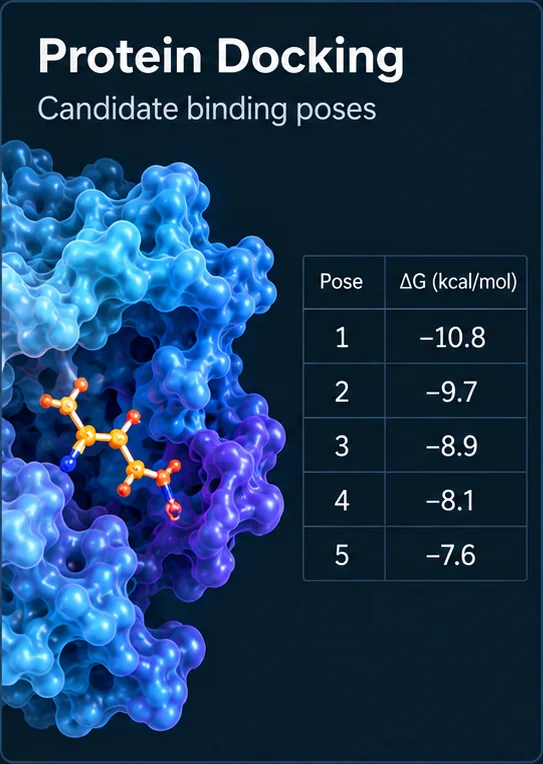
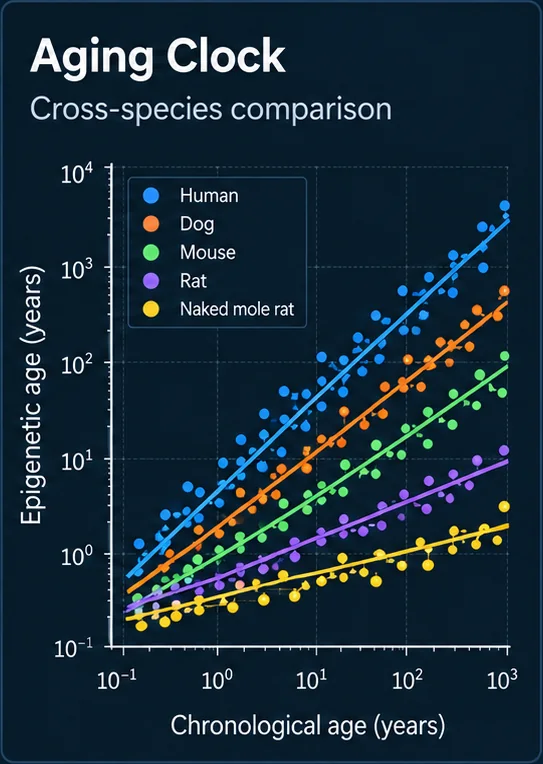
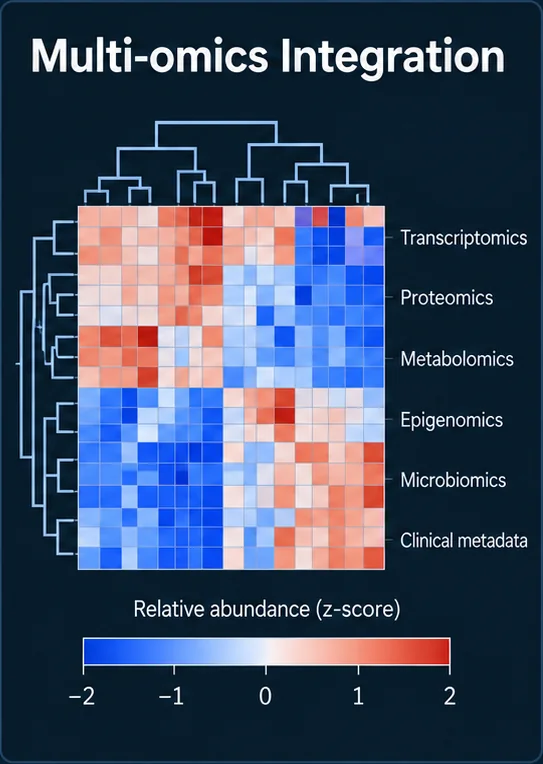
Statistics, Python, R, engineering, and AI tools. Then the lab’s biology.
Protein structure, aging clocks, multi-omics, and more.
Be prepared, contribute, and make an impact.
More time for what matters.
Accelerate biological discovery through better analysis and useful AI.
For Students
We train you for a lab’s research problem. When you’re ready, we help you pursue a suitable internship, with technical support that stays.
Check data quality. Quantify uncertainty. Test which patterns hold up and which don’t.
Build pipelines. Debug and test code. Make analyses another researcher can rerun.
Use and evaluate AI tools. Compare with simpler methods. Verify the outputs. Know when not to use AI.
One-on-one technical mentorship every weekday during active preparation and placement.
First-year students welcome. You don’t need every skill before applying. We teach the gaps. You show you can do the work.
Train for forward-deployed engineering: understand a team’s problem, build a useful solution, and help people use it.
Sample research challenges
Real research. Clearly scoped projects. Evidence you can defend.
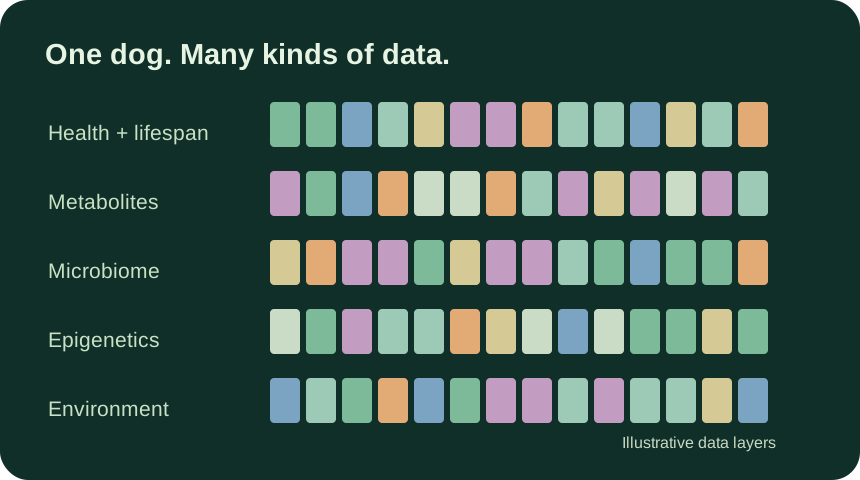
Dog Aging Project · Example challenge
Study health histories alongside available molecular measurements. Account for age, breed, and repeated samples.
Your build: a reproducible pipeline and a model tested on dogs it has not seen before.
Explore the data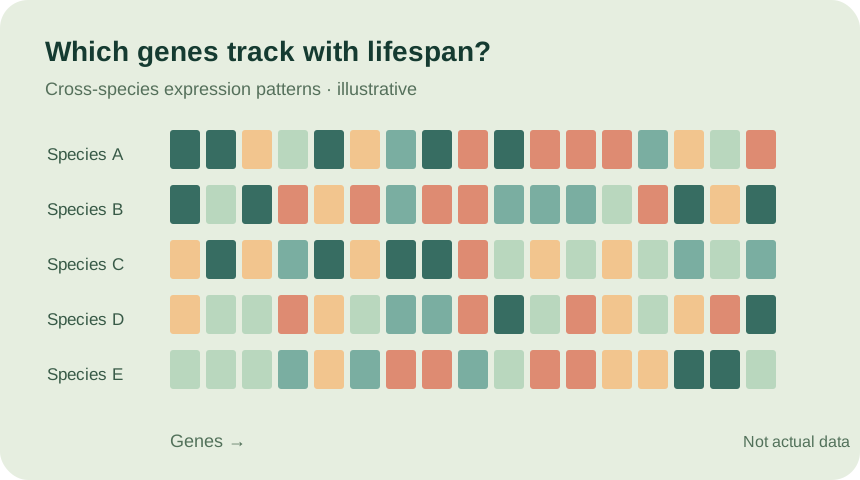
Gladyshev Lab research · Example challenge
Reproduce a published gene-expression result. Test how it changes when you account for body size and evolutionary relationships.
Your build: rerunnable code, an honest comparison, and a report of what holds up.
Explore the research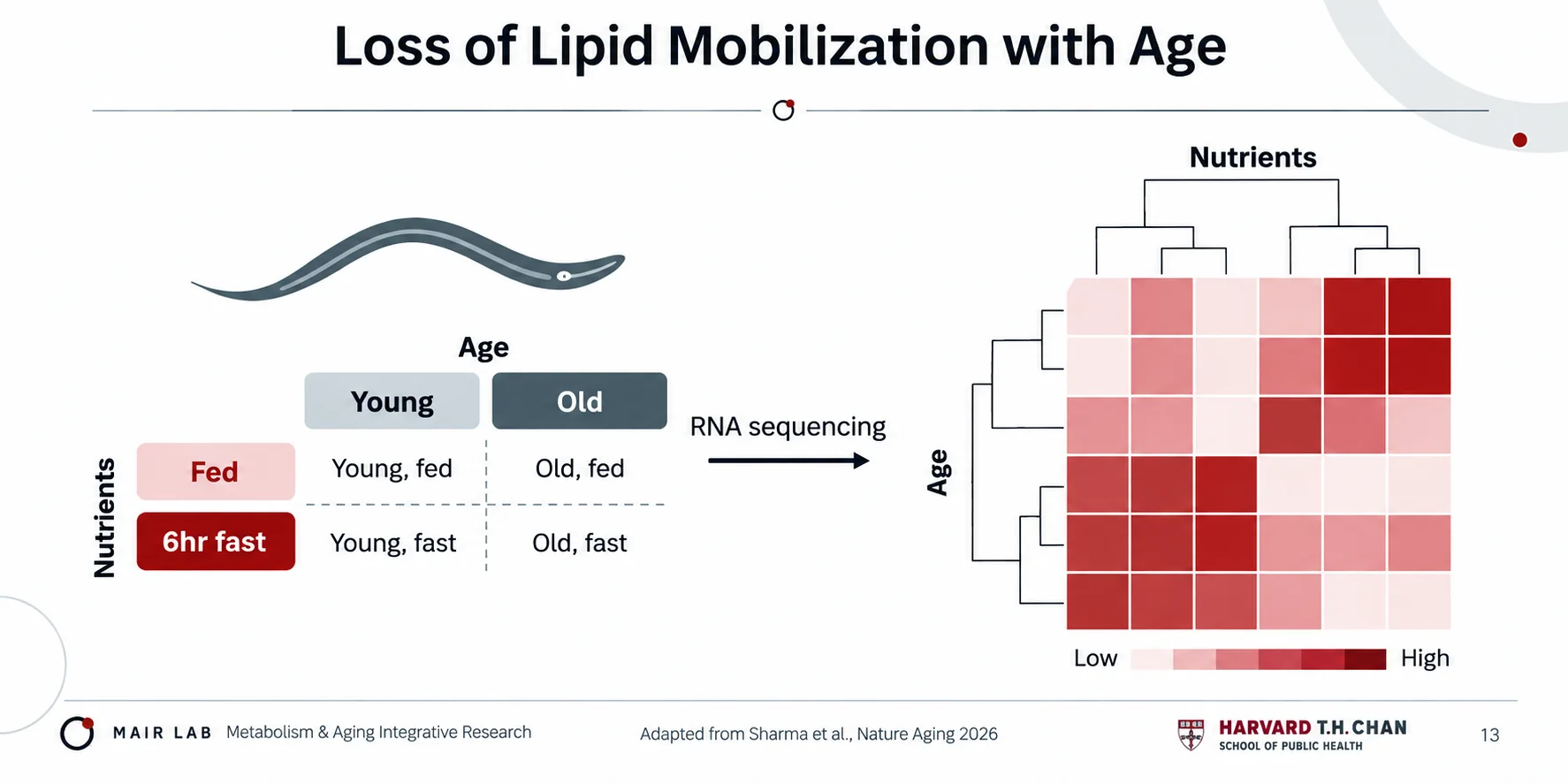
Aging experiment · Example challenge
Analyze RNA-seq data from young and old organisms under fed and fasted conditions. Identify which nutrient-response signals weaken, persist, or reverse with age.
Your build: a reproducible analysis pipeline, statistical tests that hold up, and a clear explanation of what the data do and do not support.
Redrawn illustration based on a conference slide credited to the Mair Lab and adapted from Sharma et al., Nature Aging (2026). Not original research data.
Dr. Mahdi Moqri’s lab · Example challenge
Combine DNA methylation and gene-expression data from blood. Test which aging signals hold up across independent groups of people.
Your build: a reproducible multi-omics analysis, checks for confounding, and a validation report.
Explore the researchCancer research · Illustrative workflow
Corrie Painter, PhD · Example challenge
Learn from Corrie Painter’s patient-partnered research and Even One Ventures’ patient-first approach to building biotech companies.
Proposed learning project. Collaboration, placement, and data access require agreement; none is confirmed here.
First two weeks: learn cancer biology.
We teach the foundations: tumors, cancer genomics, the immune system, and how to evaluate research evidence.
Next: understand Even One’s work.
Study its approach, read the research, and complete a relevant work sample.
Then: contribute with mentorship.
Once ready, work on an approved project when an opportunity is available.
Your build: a reproducible cancer-data pipeline or source-linked evidence tool, using public or approved data. Researchers review the results; this is not clinical decision-making.
Proposed learning projects, not confirmed placements or partnerships. Data access depends on each project’s terms. Images and diagrams are illustrative, not research results.
For Labs
Bring us the analysis you keep putting off.
We prepare a quantitative fellow for your data, methods, and research question. An experienced technical lead supports the engineering.
Review a relevant work sample, reproducible code, statistical checks, and the fellow’s understanding of your question. Your lab decides whether to host.
No required AI vendor. We work within your approved setup. If a script or established method solves the problem better, that is what we use.
You provide the research context and feedback. We provide preparation, daily technical mentorship, code review, and an agreed handover.
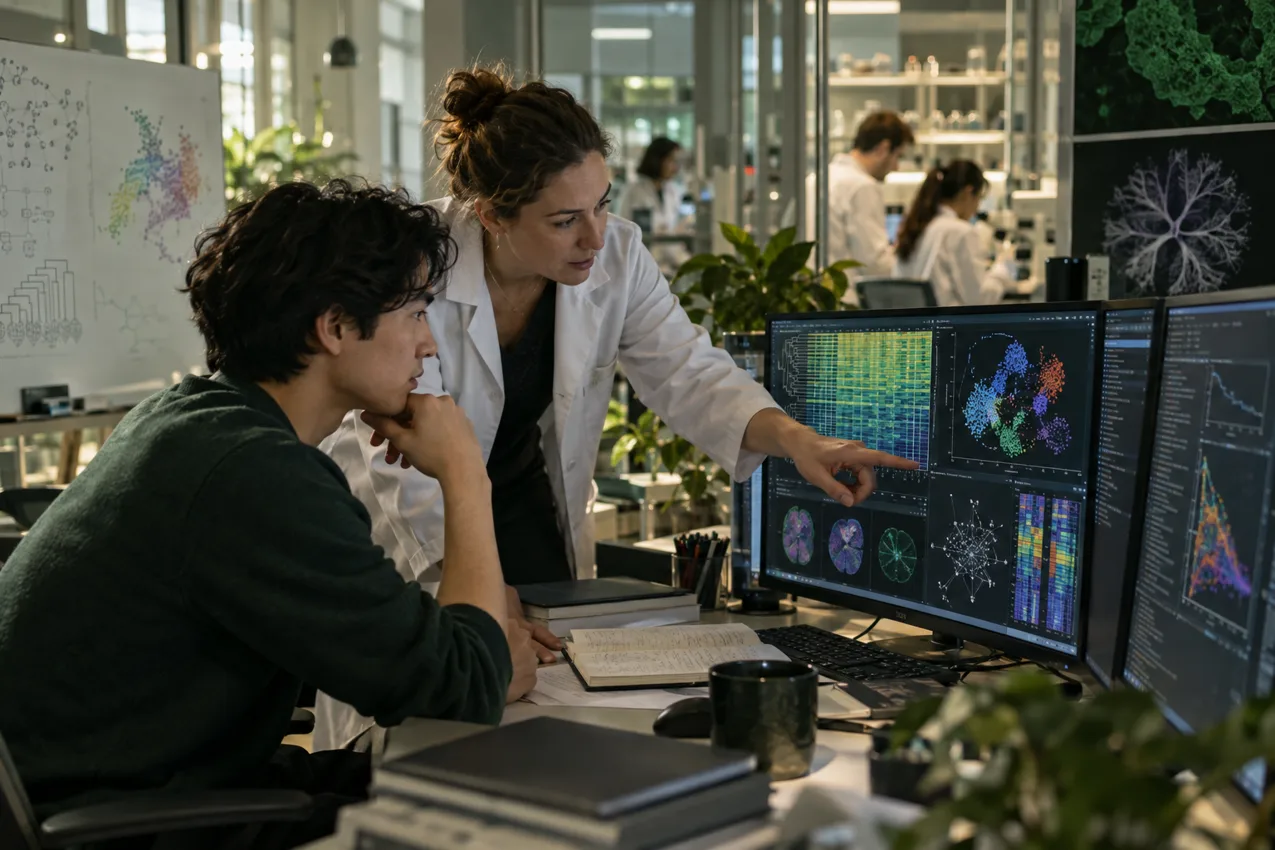
Start with a useful first deliverable: a documented workflow, a baseline, and one scoped improvement your team can evaluate.
For Supporters
Keep training free. Support technical mentors, student stipends, and the tools needed for useful research.
Sponsorship inquiries only. No donations are collected here.
Free training. Real standards.
Strong mathematical thinkers, especially math and CS students. First-year students are welcome. No prior biology training or complete toolkit is required. We look for clear reasoning, persistence, and willingness to learn.
Training is selective and tuition-free. Admission depends on fit and mentor capacity. Readiness is assessed before a lab introduction.
Claude may be part of training, alongside other appropriate tools. Our focus is transferable skill: working with data, building reliable software, evaluating models, and explaining results.
No lab has to adopt Claude or any other AI vendor. Tools and access are agreed with the host. Sometimes ordinary code is the best solution.
We prepare you for the assignment. That can include SQL, Git, APIs, testing, web interfaces, permissions, deployment, or custom machine learning. Model training and tuning are included only when relevant and permitted.
The scientific preparation might cover proteomics, epidemiology, gene expression, or structural biology. Tools such as AlphaFold or OpenFold belong where the project needs them. We teach the biology behind the analysis, not just how to run software.
Applications are rolling. Foundation-building happens first and depends on your starting point. One planned placement is ten weeks: one week of final lab-specific preparation, then nine weeks of supervised work.
Training can be remote. Each host confirms the internship’s schedule, location, and access requirements. You start when you can demonstrate readiness.
Training has no tuition. Stipends, compensation, tools, and any other costs are confirmed for each opportunity before you commit. Internships depend on readiness, available projects, funding, and host approval. Employment is a possible next step, not a guarantee.
Our initial focus is biology labs in Boston and Cambridge. You can take the analytical and engineering foundations into other fields, while learning each field’s specific requirements.
A defined research problem, a scientific reviewer, approved access, and regular feedback. We agree on scope, the lab’s time commitment, funding, evaluation, and handover before the placement begins.
Our technical lead supervises the engineering. The lab still reviews scientific assumptions and decides whether the work is useful. Private data stay within approved boundaries.
No. The examples are inspired by published research and public data resources. They are not offers of placements or statements of affiliation. We are organizing initial host opportunities, mentors, and funding.
Digital Biology Foundation is an independent nonprofit initiative in development, not a vendor certification program. Organizational and funding arrangements will be shared before sponsorship is accepted. No tax-deductible status is claimed.